Segment Overview
Route Creator
Miles
Days Out
Recommended Tire Size
Season
Elevation Gain
Difficulty
2/10 Technical
Primary Surface(s)
Paved

Route Map
Route Details
From the rolling plains to the spectacular views through the Black Hills this route is full of rare, rugged, and remote beauty that is best experienced from a bicycle. A few highlights include:
- Riding past the Center of the Nation Landmark
- The large tract of Public Lands through the Black Hills National Forest, providing for free, abundant camping.
- Spearfish Canyon Scenic byway.
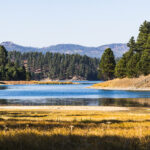
From the Northern Prairie grasses to the southern Buffalo Gap National Grasslands, the Black Hills are a hidden oasis in this prairie dominated state. The Black Hills National Forest is some of the most beautiful country in the nation and the route will take you through the heart of the hills and deep into the forest where you will experience rolling hills, spectacular vistas and an abundance of wildlife and wildflowers. The best time to ride this route would be from May through September. May and June could bring some rain, and it can get hot in July and August. You’ll enjoy the beautiful fall colors in September! Most of the roads on this route are well-kept gravel roads, with several stretches of forest service two track in the midst to spice things up a bit. The endless rolling prairie in the north and south can be made difficult with wind, or smooth sailing if at your back, and the climbing through the hills will be challenging but rewarding.
A rigid mountain bike or drop bar gravel bike would both work well for this route. The town of Spearfish, which is about halfway through the route, has two full-service bike shops for any repairs or equipment that may be needed. You can camp anywhere along the route on the Black Hills National Forest public lands or stay in one of the many campgrounds. Fires are only allowed in designated fire pits. If you find yourself in the Northern or Southern Prairies needing to camp, use your own discretion or try to make it to the nearest town for camping accommodations. There are plenty of resupply opportunities along the route, but there is a long stretch of nearly 100 miles from Belle Fourche to Buffalo with no resupply and only a few possibilities of filtering water from small stream crossings or water holes.
- Paved: 13%
- Smooth Gravel: 80%
- Rough Gravel: 0%
- 4×4 Road: 7%
- Singletrack: 0%
- There are abundant opportunities for dispersed camping along this segment of the route, please reference POIs in the route file that indicate public land boundaries.
- Having a means to treat surface water for drinking is suggested.
- Riders should be cautious on all paved sections and watch traffic at any road crossings.
- Riders could contact the RidgeRiders for parking in Spearfish and could ride either direction from there. Use the contact form on this page.
Perry and Kristi Jewett created and steward this segment of the Great Plains Gravel route.
Here is a little about Perry and Kristi in their own words:
Perry and Kristi Jewett put on 2 bike events in the Black Hills, the Dakota Five-O and the Pine Island Gravel Odyssey. They have both been bikepacking for the last 10 years and have created many routes through the black hills for their own personal enjoyment. Perry has done several bikepacking events across the nation including the AZT 350, Colorado Trail Race, Kokopelli trail, the Iditarod 350 and the Black Hills Expedition. Perry has also helped create several bikepacking routes through the hills that have become an annual group ride for local riders.
Perry and Kristi Jewett reside in Spearfish, South Dakota which is near the center of the route. They plan to consistently keep tabs on the route and make any necessary updates.
Perry and Kristi Jewett have offered to be available to answer questions if you are planning a trip on this route.
Please also get in touch with any updates on route conditions that may be relevant to other riders.
Please submit your questions and comments on the route via the contact form below.
This route traverses the traditional lands of the Cheyenne, Crow, Sihapsa, and Itazipco.