
Written by Danielle Parnes, Community Programs Manager
If you’ve gone bikepacking before you’ve likely had the experience of being welcomed into a small town on a day you really needed it. For me, it’s been someone offering me a cold seltzer and fruit on the hottest day, chatting with a local who had stories of their brothers who were among the first to ride the route I was riding, and a local offering shelter (and laundry!) on a stormy night.
This fall we brought a team to the American Planning Association California conference to talk about the impact of bikepacking on economic development in small towns, and the relationships we can build with towns as bikepackers and route developers. Read on to learn more about five projects across the country, and how the route creators are partnering with local towns.
People traveling by bike have relied on local businesses for food, accommodations and support for as long as people have been traveling by bike. From some of the first groups creating guidebooks of local accommodations along bike travel routes in the 1800s in Europe to the Bikecentennial in the US, these relationships have naturally grown over time and have been supported by concerted efforts like ACA and Rails to Trails – organizing riders and developing relationships with locals is more important now than ever.
And today we have a whole new set of challenges to address, which continue to demonstrate the importance of our relationships with the towns we ride through. With an increase in online mapping, it’s easier than ever to follow a route to a place you don’t have any existing relationship with; this provides an opportunity to connect with new communities but also may put an unwanted strain on small communities as infrastructure catches up. We continue to see a growing shift moving away from road touring and toward gravel and dirt, moving riders to explore more rural areas. We’re continuing to see cuts to federal funding for public lands. And finally, we’re still seeing the impacts of the pandemic on small towns, with some rural areas increasing in population and others with economies still hurting.
While we’re always adapting our approach as bikepacking changes and depending on where we’re working, we approach our relationships with local towns with a few key principles:
- Bikepacking can bring a valuable return on investment: Bikepacking routes can often utilize existing infrastructure instead of building new trails. Piecing together the best of existing trails and destinations alongside effective marketing and outreach can allow towns and regions to create an experience attracting bikepackers to their region for a low investment.
- Bikepacking can be way to gradually grow tourism: While many small towns themselves are facing their own housing crisis and don’t yet have infrastructure for large waves of seasonal tourists, bikepacking routes tend to grow in popularity slowly over time, providing time for local businesses to adapt to needs of cyclists, and for cyclists to build partnerships with local businesses.
- Bikepacking route development should engage local communities from the beginning: Instead of an outsider coming in and laying a route over the place, we aim to develop bikepacking routes in partnership with the local community, such as local businesses, land managers, local riders, and local governments, to ensure they are respectful and valuable for locals and visitors alike.
- Bikepackers should travel with an ethos of leave no trace: In fact, in addition to developing bikepacking-specific Leave No Trace Principles with the Center for Outdoor Ethics, we also created Positive Impact Bikepacking Practices, asking bikepackers to go above and beyond, making a positive impression on the people, businesses and communities we pass through. Marketing and materials related to routes can provide opportunities to educate riders, and partnerships with towns and businesses can improve infrastructure for bikepackers, such as designated bathrooms, water resources, or campsites, making it easier to have a lower impact.
At the talk, I shared about three projects we’re working on at Bikepacking Roots, demonstrating a variety of ways we partner with local governments and businesses:
Fayetteville Bikepacking Route Network
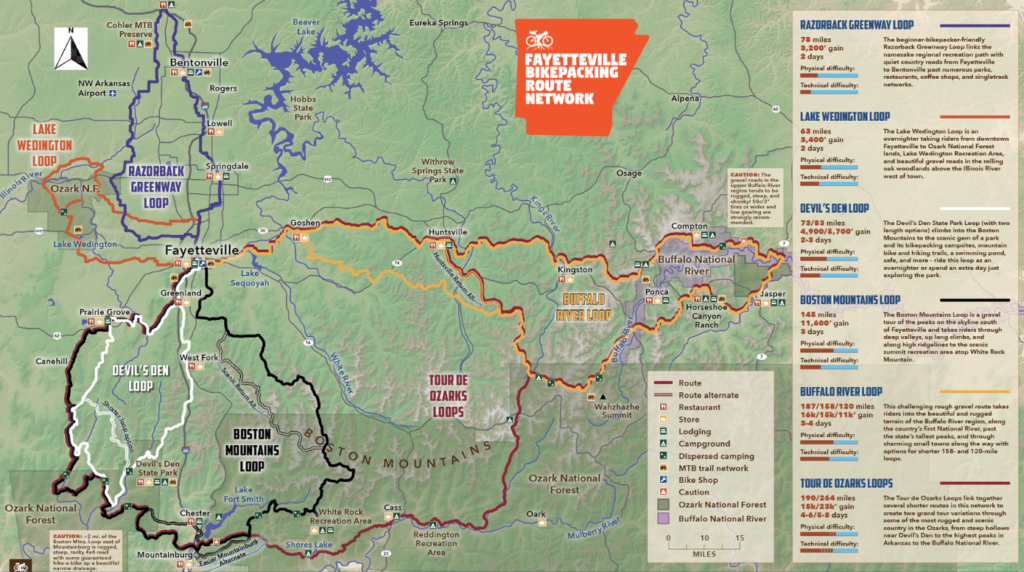
The Fayetteville Bikepacking Route Network is made up of five unique routes ranging from 60 to 190 miles (for 2 to 4-day trips), and these loops can be linked together into several longer tours of up to 260-plus miles. Partnering with Experience Fayetteville, we intentionally made all routes start in downtown Fayetteville, and by partnering with Experience Fayetteville, we were able to ensure starting point infrastructure like overnight parking and permitting needs were easily accessible to riders. Kurt Refsnider led the development of the new network, in collaboration with local experts like Andrew Onermaa of Ozark Gravel Cyclists.
Monongahela National Forest Bikepacking Route Network
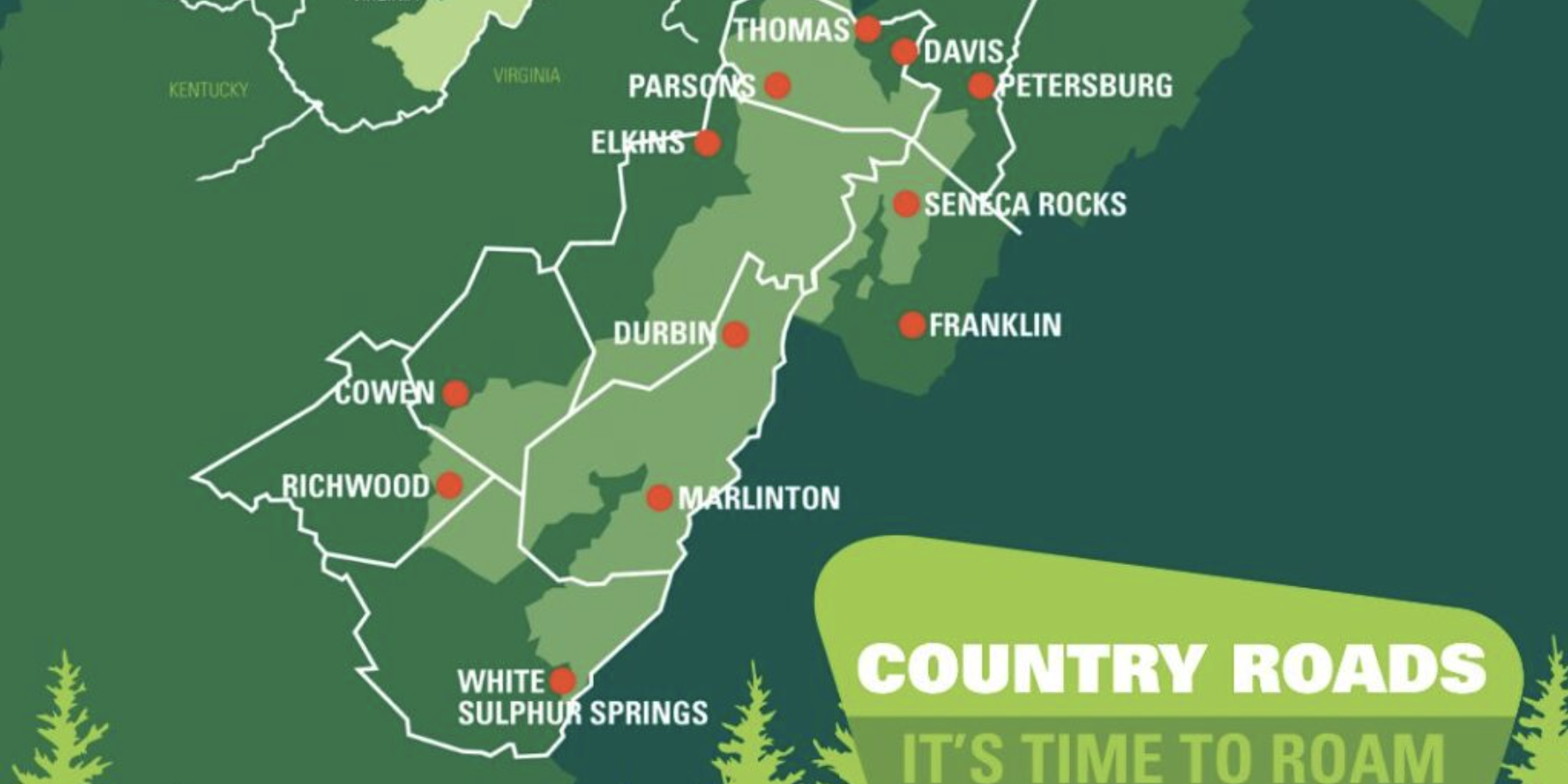
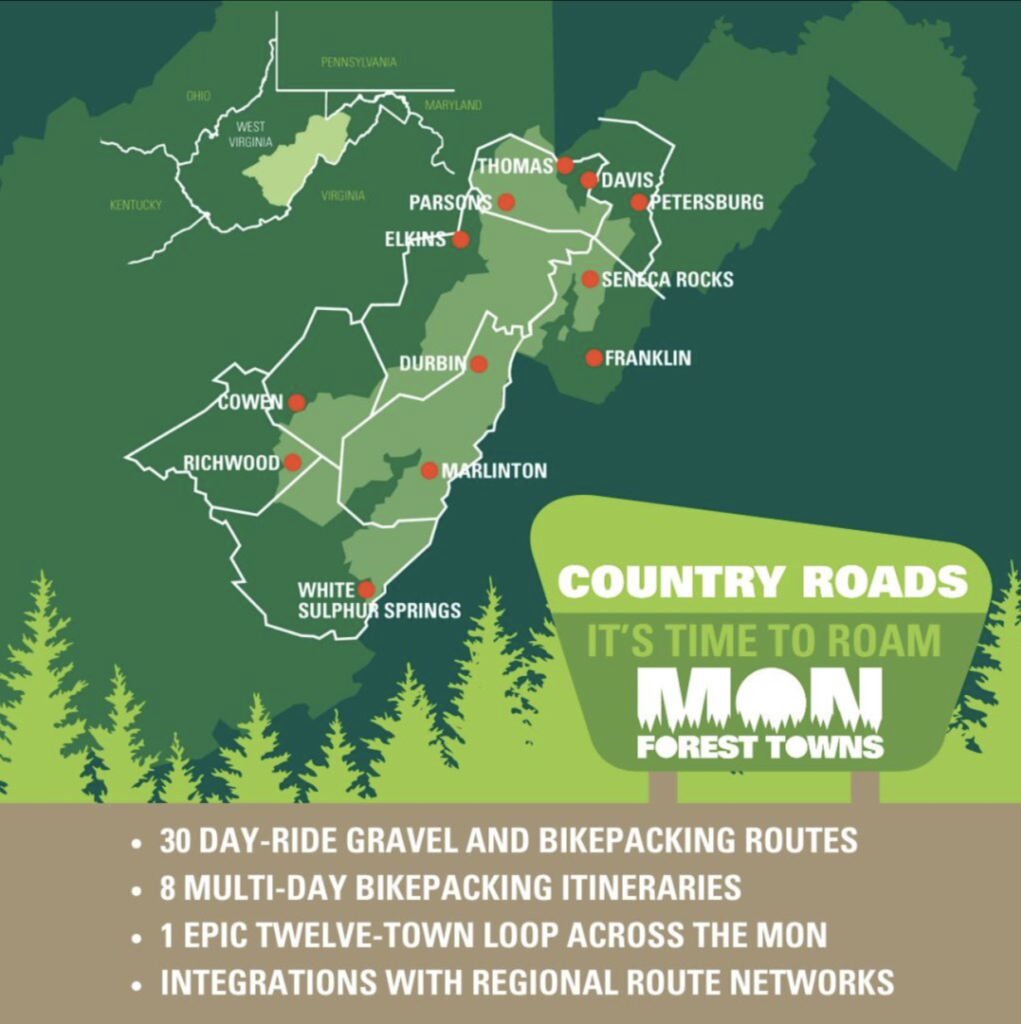
When completed, this route network will include 30 day-ride routes and eight multi-day bikepacking itineraries while also providing support for businesses to help maximize the economic impact of recreation tourism. For this project we’re working with the Mon Forest Towns Partnership (MFTP), a regional non-profit working to advance outdoor recreation and downtown development in twelve towns across eight West Virginia counties, Village to Village Trails, and MountainRides. In contrast to Fayetteville, this project is about getting people to the eight towns across the region, and to that end the team held engagement meetings with all the towns to ensure the routes are bringing value for both the local communities and people riding them.
Orogenesis
Orogenesis is another route in development that is aiming to be the longest mountain bike route, stretching from Canada to Mexico along the west coast. Because of the large scale of this project, it is much more complex in terms of partnerships, and given the single track focus the partnerships have been focused on existing trail stewardship groups, that already have local relationships with towns and are slowly building that trust. Bikepacking Roots fiscally sponsored this project to kick it off, and we are excited that is has now become its own 501c3 organization.
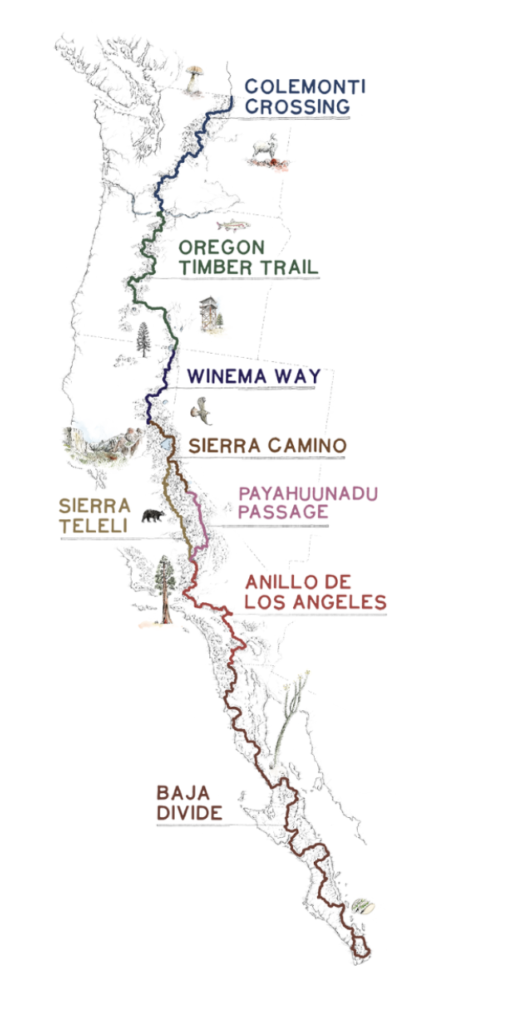
And then we had three folks we partner with share about projects they’re working on in California:
Connected Communities, Sierra Buttes Trail Stewardship
Matt McCourtney, a Bikepacking Roots Community Steward and Sierra Buttes Trail Stewardship board member, shared the story of the Connected Communities Project in the Lost Sierra. Still underway, this project aims connect 15 towns and was explicitly imagined as a way to boost rural communities that previously relied on resource extraction economies as well as places hard hit by wildfires.
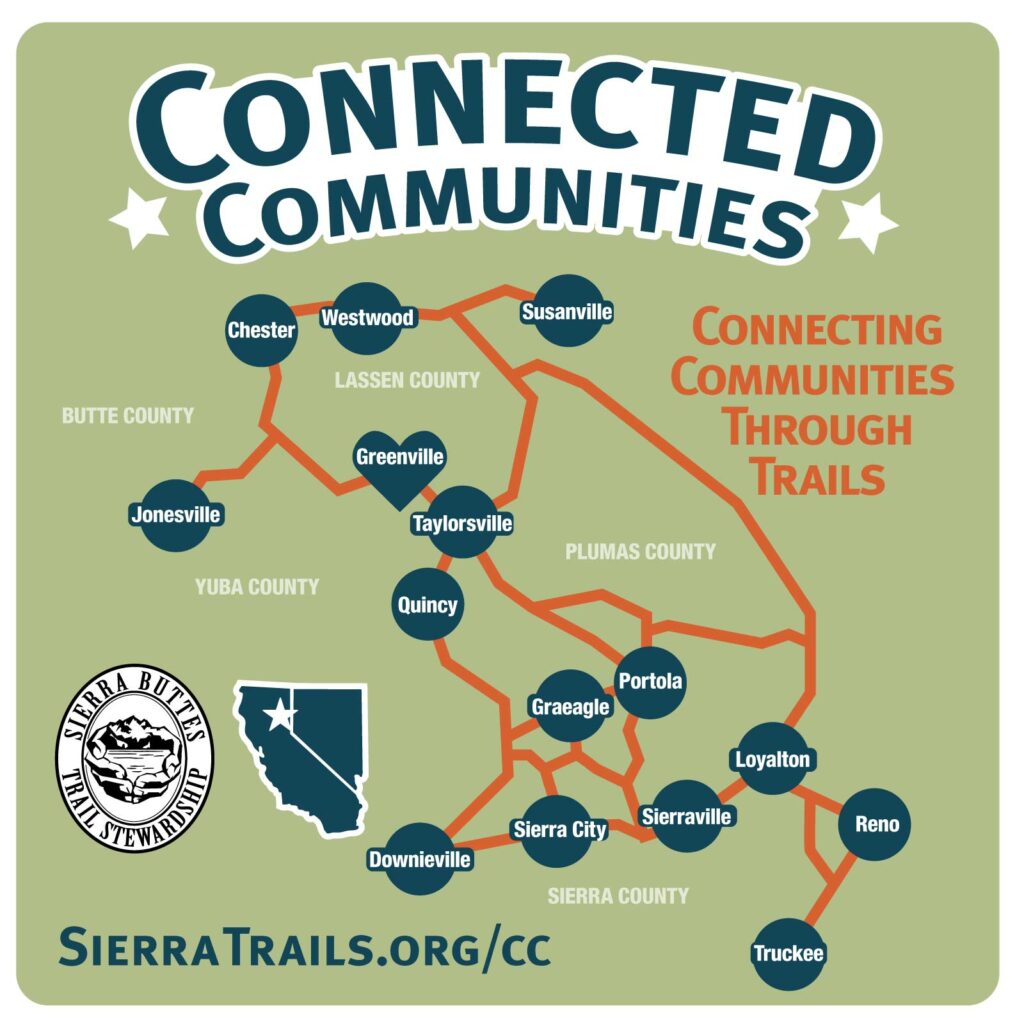
Ranchita Rambler
Emily Elliott, a Bikepacking Roots Community and Route Steward and developer of the Ranchita Rambler, told the story of how’s she’s been riding in the Anza Borrego area for years, eventually developing a public route to make the area more accessible and approachable for a desert bikepacking route and support rural communities via low-impact tourism. She described the relationship she had built with Ranchita Bodega, which provides much needed food to riders but is also the only grocery option for locals in a large region — demonstrating how tourists coming through help make local businesses more resilient to economic challenges.
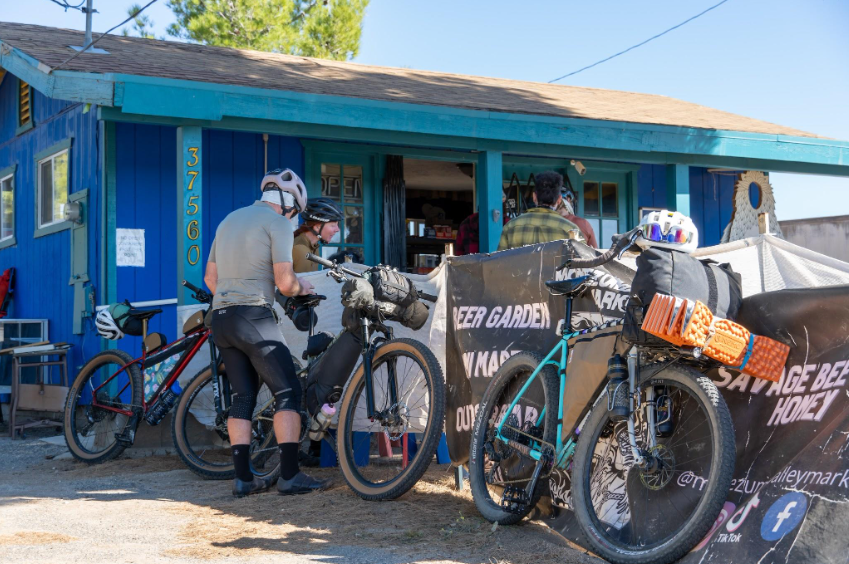
Bay Area Ridge Trail
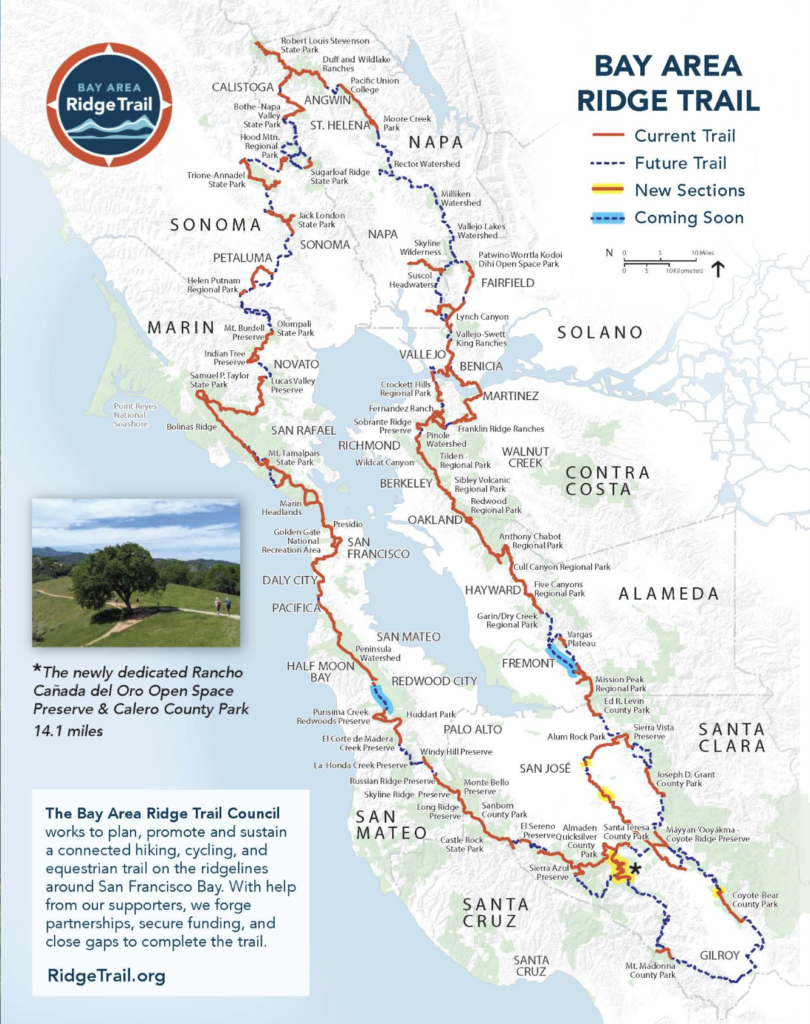
Natalia Cortes, Event & Volunteer Manager at the Bay Area Ridge Trail and organizer with RAR Bay Area, shared the Bay Area Ridge Trail project, which aims to provide a connected hiking, cycling, and equestrian trail on the ridgelines around San Francisco Bay. Natalia described two route alternatives they were considering: one route provided a more remote trail experience with better views, but has more complex land ownership, topography, and a much longer timeline to develop. In contrast, the other option was more urban and would utilize existing sidewalks and bike lanes with improvements already underway. The alternate route also has buy-in from partnering organizations and agencies, and provides more amenities like food and places to stay. They ended up choosing the second option, listening to the value of both building on existing work of other organizations and the value of local businesses to those riding the route.